Reviewed by Dr. Avi Israeli, DDS — Sage Dental NJ, Wall Township. DDS, University at Buffalo School of Dental Medicine; Specialty Certificate in Esthetic Dentistry; practice founded 2006.
Last updated: September 16, 2026
Sage Dental NJ is an independent practice owned by Dr. Israeli. It is not affiliated with the multi-state Sage Dental group.
Age alone does not rule anyone out of dental implants. In the research on patients over 65, implant survival rates are comparable to younger adults, and one 2025 meta-analysis found patients over 75 did slightly better than those aged 65 to 75. What decides candidacy is how much jawbone is left, how well any medical conditions are controlled, and which medications you take. Those are exactly the things a CBCT scan and a medical history review sort out, which is why the consultation at our Route 138 office in Wall Township is complimentary and includes both.
This guide is written for people in Monmouth and Ocean County who are 60, 70, or 80 and have been told, or assume, that it is too late. Most of it is about what is true, what is not, and what it costs here.
Key takeaways
- There is no upper age limit. Bone volume, medical control, and medications matter; birth year does not.
- Original Medicare does not pay for implants. Some Medicare Advantage plans include a dental benefit. We are out-of-network with all plans but hand you the codes to submit.
- Diabetes, blood thinners, and osteoporosis medications are usually manageable, not disqualifying, when they are reviewed before surgery.
- Years in dentures shrink the jaw. Grafting, zygomatic, and pterygoid implants exist for that. Being turned away elsewhere is not a final answer.
- Our pricing is published: single implant from $1,995; full arch from $11,990, with extractions and grafting included.
In this article
- Is there an age limit for dental implants?
- Which implant options fit seniors best?
- Diabetes, blood thinners, osteoporosis drugs: what changes
- Told you have no bone? What that actually means
- Sedation and safety for older patients
- Does Medicare cover dental implants?
- What dental implants cost for seniors in NJ
- Getting here from Ocean County's 55+ communities
- Questions seniors ask us most
Is there an age limit for dental implants?
No. There is no upper age limit for dental implants, and advanced age by itself is not a contraindication. A 2025 systematic review and meta-analysis of 27 studies and 3,892 implants found five-year survival of 96.8% in patients over 75, compared with 92.1% in patients aged 65 to 75, with no significant difference in success rates between the groups. A separate long-term study following 902 implants in patients aged 65 to 89 for up to 17 years recorded implant-level survival of about 95%.
That does not mean every older adult is a candidate. It means the reasons someone is not a candidate are specific and checkable:
- Not enough jawbone in the right place, which a CBCT scan measures in millimeters
- A medical condition that is not currently controlled
- A medication that changes how bone heals
- Untreated gum disease around remaining teeth
Each of those has a workaround, a waiting period, or a different implant approach. None of them is "you are too old." Dr. Israeli has placed implants for patients well into their 80s; the oldest cases are usually the ones that had been told no somewhere else first.
Which implant options fit seniors best?
Seniors choose from the same four implant options as anyone else, and the right one depends on how many teeth are missing and whether you want something you can remove. What tends to be different after 65 is that more people are replacing a full arch rather than a single tooth, and more people are coming out of dentures.
| Option | Best for | Removable? | Typical implants per arch |
|---|---|---|---|
| Single implant with crown | One missing tooth, healthy neighbors | No | 1 |
| Implant-supported bridge | Two to four missing teeth in a row | No | 2 to 3 |
| Implant-retained overdenture ("snap-in") | Loose lower denture; lower budget; wants to remove it at night | Yes | 2 to 4 |
| Fixed full-arch (All-on-X / Zirconia ImmediaTEETH®) | Failing dentition or full denture; wants teeth that stay in | No | 4 to 6 |
For a patient who has worn a lower denture for years, the honest comparison is between a snap-in overdenture and a fixed arch. The overdenture costs less and still stops the slipping; the fixed arch chews closer to natural teeth and is cleaned like teeth rather than taken out. We lay both out side by side in fixed versus removable implant teeth, and the Better Than A Denture™ protocol is built specifically for the denture-to-fixed transition, with final teeth delivered on a 14-day timeline.
Diabetes, blood thinners, osteoporosis drugs: what changes
Common conditions of older adults change how we plan implant surgery; they rarely prevent it. The three we discuss most in Wall Township are diabetes, anticoagulants, and antiresorptive medications for osteoporosis. Here is the current evidence on each, and what it means for planning.
| Condition or medication | What the evidence says | What we do about it |
|---|---|---|
| Type 2 diabetes | Well-controlled diabetes (HbA1c at or below 7%) shows implant survival comparable to non-diabetics. Poorly controlled diabetes (HbA1c above 8%) is consistently linked to more bone loss around implants and more complications. | We ask for a recent HbA1c. If it is high, we coordinate with your physician before surgery rather than proceeding. |
| Blood thinners (warfarin, apixaban, rivaroxaban, clopidogrel) | Bleeding is manageable with local measures in most dental surgery. Stopping the medication without the prescribing doctor's input carries its own risk. | We never tell a patient to stop a blood thinner on our own. We contact the prescribing physician and plan the procedure around their guidance. |
| Bisphosphonates and denosumab for osteoporosis (alendronate, risedronate, zoledronic acid, Prolia) | These drugs carry a small risk of medication-related osteonecrosis of the jaw (MRONJ) after invasive dental procedures. The American Association of Oral and Maxillofacial Surgeons advises that osteoporosis patients be informed of the risk of early and late implant failure; the risk is higher with intravenous dosing, longer duration, and steroid use. | We record the drug, dose, route, and duration, review the AAOMS guidance with you, and in some cases consult the prescribing physician before deciding. |
| Heart disease and high blood pressure | Stable cardiovascular disease is not a contraindication. Uncontrolled hypertension on the day of surgery is a reason to reschedule. | Blood pressure is checked at the consultation and again before surgery. For full-arch cases under IV sedation, a board-certified MD anesthesiologist monitors you throughout. |
| Head and neck radiation history | Radiation to the jaws raises the risk of osteoradionecrosis and implant failure, and is one of the few history items that can be a true contraindication. | We request the radiation records and field before offering any surgical plan. |
This table describes general clinical patterns and is not a candidacy decision for any individual. Whether implants are appropriate for you is determined at an in-person consultation after a CBCT scan and medical history review.
Told you have no bone? What that actually means
"You don't have enough bone" usually means you don't have enough bone for a conventional implant in a conventional spot. The jaw shrinks when teeth are gone; a decade or two in a full denture can leave the upper jaw thin enough that standard implants cannot be placed safely near the sinuses. That is common in our Ocean County patients, and it is the single most frequent reason people arrive here after being declined elsewhere.
There are three routes around it, and which one fits depends on where the bone is missing and how quickly you want teeth:
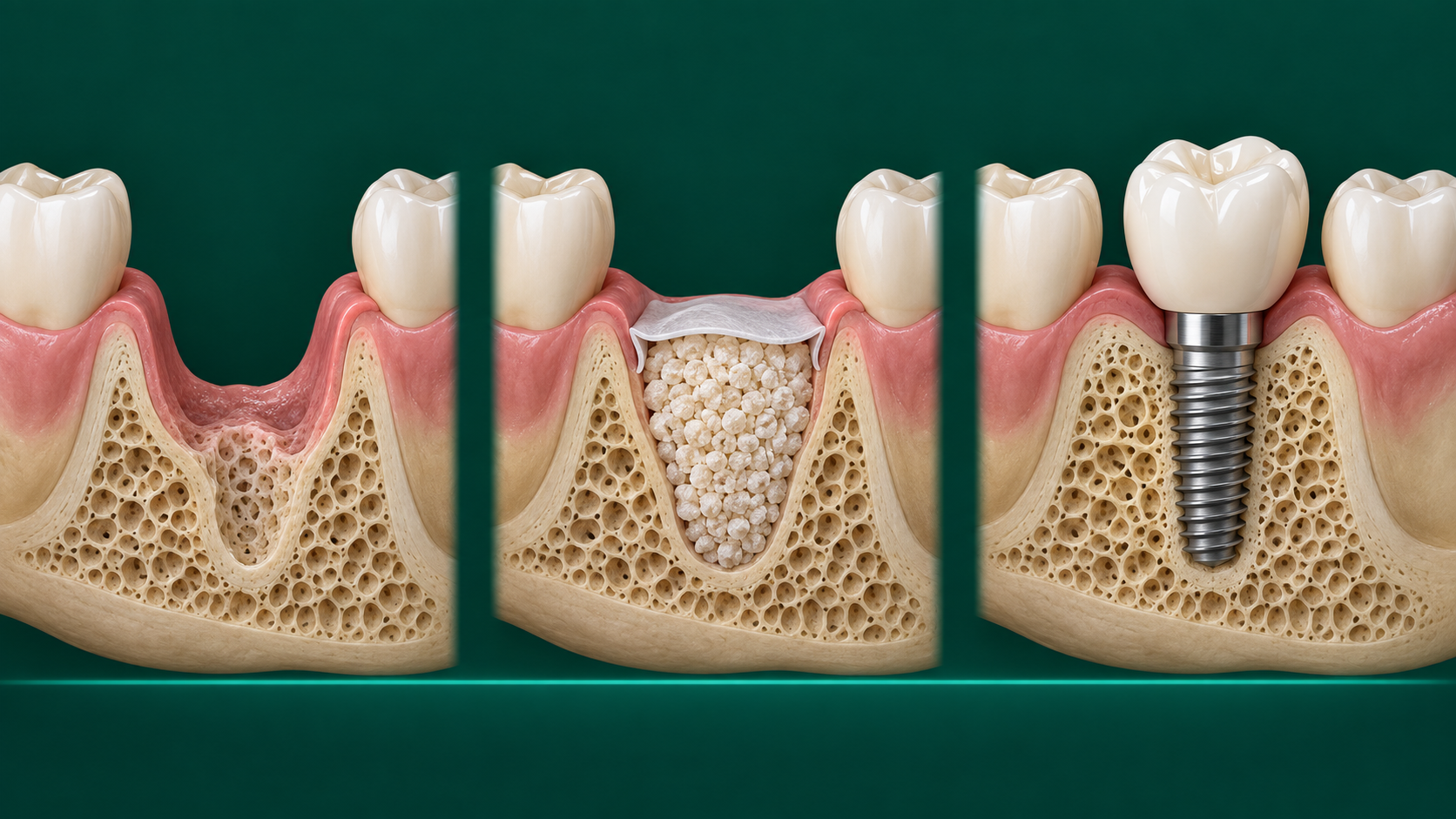
- Bone grafting and sinus lifts rebuild volume, then implants follow after healing. Slower, but it preserves the option of conventional implants.
- Angled and pterygoid implants anchor in the denser bone behind the upper molars, often avoiding a graft entirely.
- Zygomatic implants anchor in the cheekbone rather than the upper jaw, so the amount of maxillary bone stops being the limiting factor. They are typically loaded the same day.
Dr. Israeli places all three, including trans-sinus and trans-nasal variations, at the Wall Township office. If you have a prior CBCT from another practice, bring it; if not, we take one at no charge and show you on the screen exactly where the bone is and is not. Our guide to getting dental implants with bone loss goes deeper on each route.
Sedation and safety for older patients
Full-arch implant surgery at Sage Dental NJ is done under IV sedation administered and monitored by a board-certified MD anesthesiologist, not by the dentist doing the surgery. That separation matters more as patients get older and carry more medications, because someone whose only job is your airway, heart rate, and blood pressure is watching them the entire time.
Before any sedated procedure we review:
- Your full medication list, including over-the-counter drugs and supplements
- Recent labs your physician has on file, where relevant
- Who is driving you home and staying with you that evening
Single-tooth implants are usually placed under local anesthesia, with nitrous oxide available. Most patients describe pressure and vibration during placement rather than pain, and soreness for a few days afterward that is managed with over-the-counter medication. Our IV sedation dentistry page explains what to expect on the day.
Does Medicare cover dental implants?
Original Medicare (Parts A and B) does not cover dental implants, dentures, extractions, or routine dental care. Medicare's own coverage page lists implants specifically as excluded, and the narrow exceptions involve dental work tied to another covered medical treatment, such as an oral exam before a heart valve replacement or organ transplant. Implant placement to replace missing teeth does not qualify.
Medicare Advantage (Part C) plans are sold by private insurers and often include a dental benefit. Some of those benefits cover implants up to an annual maximum; many cover only cleanings, X-rays, and basic services. The only way to know is the plan's Summary of Benefits, and the number that matters is the annual dental maximum, which is frequently in the range of one to a few thousand dollars.
| Plan type | Covers implants? | What to check |
|---|---|---|
| Original Medicare (Parts A and B) | No | Nothing to check; dental is excluded outside narrow medical exceptions |
| Medigap (supplement) | No | Supplements follow Original Medicare and add no dental benefit |
| Medicare Advantage (Part C) | Sometimes | Summary of Benefits: is "implants" listed under major services, and what is the annual maximum |
| Standalone senior dental plan (Delta, Humana, UnitedHealthcare, etc.) | Sometimes, often after a waiting period | Waiting period, annual maximum, and whether implants are excluded as "cosmetic" |
How we handle insurance: Sage Dental NJ is out-of-network with all dental and medical insurance plans. We give every patient the CDT procedure codes and a treatment breakdown so you can submit to your Medicare Advantage or dental plan for whatever reimbursement it allows. We do not bill the plan directly, and we do not adjust our pricing based on which plan you carry.
What dental implants cost for seniors in NJ
A single implant with abutment and crown at Sage Dental NJ starts at $1,995, and a full arch of fixed teeth starts at $11,990 per arch. We publish these numbers because most practices do not, and because a patient comparing options on a fixed income deserves to see them before driving anywhere. There is no separate "senior price"; the price is the price.
| Treatment | Starting price | What is included |
|---|---|---|
| Single implant, abutment, and crown | $1,995 | Implant, abutment, final crown |
| Single implant with extraction and bone graft | $2,795 | Extraction, socket graft, implant, abutment, crown |
| Full arch, fixed (All-on-X) | $11,990 per arch | Extractions, bone grafting where needed, implants, same-day provisional teeth, final zirconia teeth, IV sedation with MD anesthesiologist |
| Full mouth, upper and lower, all-inclusive | $19,990 | Everything above for both arches |
| Consultation with CBCT scan and X-rays | $0 | Exam, 3D scan, X-rays, written treatment options to take home |
Prices current as of the date above and subject to change. Your written treatment plan is the controlling figure. Extractions and grafting are included in full-arch pricing; there are no add-on fees for them.
Financing runs through multiple third-party lenders, including options for patients with limited or no credit history, 0% promotional plans up to 18 months, and fixed-APR plans with no prepayment penalty. A co-borrower is allowed, which is often how adult children help a parent fund a full arch. HSA and FSA funds are accepted. Details are on our financing options page, and the full New Jersey pricing picture is in our cost of dental implants in New Jersey guide.
Zero hidden fees, no upcharges
The price on your written treatment plan is the price you pay. It includes the extractions, the grafting, the sedation, and the final teeth. Bring the plan another office gave you and we will show you line by line what is and is not in it.
Schedule a complimentary consultationGetting here from Ocean County's 55+ communities
Sage Dental NJ is at 1520 Route 138 in Wall Township, a few minutes off Garden State Parkway exit 98. A large share of our full-arch patients come north on the Parkway from the adult communities in Toms River, Berkeley, Manchester, and Lakewood, and the drive is short enough that same-day implant surgery with a ride home is routine.
| Coming from | Route | Typical drive |
|---|---|---|
| Brick (Greenbriar I, Lions Head) | Parkway north, exit 91 to exit 98 | About 15 minutes |
| Lakewood (Leisure Village, Leisure Village East) | Parkway north from exit 89 or Route 70 east to Route 34 | About 20 minutes |
| Toms River (Holiday City at Silverton, Greenbriar Woodlands) | Parkway north, exit 82 to exit 98 | About 25 to 30 minutes |
| Berkeley Township (Holiday City at Berkeley, Silver Ridge) | Route 37 to Parkway north | About 30 to 35 minutes |
| Manchester and Whiting (Crestwood Village, Leisure Village West, Renaissance) | Route 70 east to the Parkway, or Route 37 to the Parkway | About 35 to 40 minutes |
| Lacey and Forked River (Pheasant Run) | Parkway north, exit 74 to exit 98 | About 35 to 40 minutes |
Parking is on-site at the door, with no garage and no stairs to the entrance. For sedated procedures you will need a driver; most of our Ocean County patients bring a spouse or an adult child, and the consultation is a good time for that person to come along and hear the plan. We also maintain pages for each of these towns: Brick, Lakewood, Berkeley, Manchester, Lacey, and Stafford.
Find out whether implants are realistic for you
The consultation is complimentary, runs about two hours, and ends with your options and prices in writing. Bring a spouse or adult child if you like; most Ocean County patients do.
Included in your visit, at no charge
- CBCT 3D scan and X-rays
- Bone and medication review with Dr. Israeli
- Written treatment options and pricing to take home
- Second opinion on any plan from another office
No referral needed. Same-day surgery is planned around your driver.
Questions seniors ask us most
Candidacy
Should a 70-year-old get dental implants?
A healthy 70-year-old with adequate bone is as reasonable a candidate as a healthy 50-year-old. Age is not a factor in the research on implant survival; controlled medical conditions, bone volume, and medications are. The decision is made from a CBCT scan and a medical review, not from a birth date.
Are dental implants safe for seniors?
In appropriate candidates, yes. Five-year implant survival in patients over 75 was 96.8% in a 2025 meta-analysis. The safety considerations that grow with age are about medications and sedation, which is why full-arch surgery here is monitored by a board-certified MD anesthesiologist and why we coordinate with your physician on blood thinners and osteoporosis drugs before surgery.
Can I get implants if I have worn dentures for 20 years?
Usually, though long-term denture wear often means the jaw has shrunk, and the upper jaw may need grafting, pterygoid implants, or zygomatic implants instead of conventional ones. Dr. Israeli places all of these. A CBCT scan shows which route fits, and it is taken at no charge during the consultation.
Cost and coverage
Will Medicare pay for dental implants for seniors?
Original Medicare will not. Some Medicare Advantage plans include a dental benefit that covers implants up to an annual maximum; check the plan's Summary of Benefits under major services. We are out-of-network with every plan but provide the procedure codes so you can submit for reimbursement.
Are there free dental implants for seniors?
Not in any reliable form. Occasional dental-school or charity programs exist, with long waits and limited scope, and offers of "free implants" in advertising usually attach to a paid procedure. What we can offer is a $0 consultation with CBCT scan, published pricing so you know the number before you commit, and financing with a co-borrower option.
What is the cost of dental implants for seniors near me?
At Sage Dental NJ in Wall Township, a single implant with crown starts at $1,995 and a fixed full arch starts at $11,990, with extractions and grafting included. There is no senior-specific pricing. Prices are subject to change and confirmed in your written treatment plan.
Logistics
How many visits will I need, and how far is the drive?
A single implant typically involves a consultation, a placement visit, and a crown visit after healing. A full arch involves the consultation, a surgery day where you leave with provisional teeth, and follow-ups for the final teeth. From Toms River the drive is about 25 to 30 minutes via Parkway exit 98; from Brick, about 15. We schedule sedated visits with your driver's availability in mind.
Do you take patients who were turned down elsewhere?
Yes, and a large share of our full-arch patients are in that group. Bring the other office's plan and any scans. Often the answer is a different implant approach, such as zygomatic or pterygoid placement, rather than a different answer about whether implants are possible at all.
Sage Dental NJ (Dr. Avi Israeli, DDS) — independent practice, not affiliated with any other Sage Dental group
1520 Route 138, Wall, NJ 07719
Phone: (732) 528-6007
Mon–Wed 8:30am–5:00pm · Thu 10:30am–7:00pm · Fri 8:30am–2:00pm · Sat–Sun closed
Sources
- Abou-Ayash S, et al. Implant survival in patient populations with a mean age of 65–75 years compared to older cohorts: a systematic review and meta-analysis. Clinical Oral Implants Research, 2025. PMC12423580
- Long-term outcomes of dental implants placed in elderly patients: a retrospective clinical and radiographic analysis. PubMed 26775927
- Dental implant outcomes in patients with diabetes mellitus: a systematic review. BMC Oral Health, 2026. PubMed 42177496
- American Association of Oral and Maxillofacial Surgeons. Position paper on medication-related osteonecrosis of the jaws, 2022 update. aaoms.org
- Medicare.gov. Dental services coverage. medicare.gov
- Centers for Disease Control and Prevention. Prevalence of tooth loss among older adults: United States, 2015–2018. NCHS Data Brief No. 368. cdc.gov